
Disconnect Wardogs Guide
What anti-cheat does Wardogs use?
Wardogs uses ELYTRA, identified as kernel-level anti-cheat on its official Steam page. That answers which anti-cheat the game names, but it does not tell you that a particular cheat is undetectable or that every launch error is a ban.
Use the official Wardogs sources for the anti-cheat and enforcement rules, and Disconnect's live status notice for its product availability. Those sources answer different questions. A product being available does not remove the possibility of account enforcement.
The current anti-cheat is ELYTRA
The Wardogs Steam page names ELYTRA and describes kernel-level anti-cheat. That is the current reference checked for this article. A guide naming a different system should not take precedence over the game's own current disclosure simply because it appears prominently in search.
Anti-cheat names are easy to carry over from one game to another. A provider might support several games, and a discussion might concern an earlier test rather than the release you are playing. Keep the game and the date attached to any claim about which anti-cheat is in use.
The name alone also does not tell you the entire enforcement process. A named anti-cheat, a server administrator and the developer's account system can be relevant to different events. If something stops working, first identify what the message actually says rather than assuming all three have made the same decision.
For the cheat features themselves, the Wardogs cheats guide explains aimbot, Player ESP and radar. The purpose here is to explain status and enforcement without treating product terminology as a safety claim.
What kernel-level means for the player
Kernel-level software operates with privileges deeper in the operating system than an ordinary application. In an anti-cheat description, the phrase identifies that level of access. It does not mean the game has published every check the software performs or every reason it might refuse a connection.
There are two common mistakes here. One is assuming that kernel-level protection must detect every cheat immediately. The other is assuming that a cheat which worked yesterday is outside the anti-cheat's reach. Neither conclusion follows from the privilege level. Detection capability and the timing of an enforcement action need their own evidence.
A player does not need to know an unpublished detection method to understand the practical distinction. A normal launch, an error message and an account restriction are different observable events. They should be described separately, with the exact wording and timing, instead of being collapsed into a single claim that the anti-cheat is broken.
Disconnect's Wardogs product is advertised as external. That describes a separate process arrangement. It does not cancel the game's anti-cheat requirements or make the software exempt from inspection. External and kernel-level describe different software, at different levels, and should not be treated as opposite guarantees.
Cheat status has a date attached to it
Undetected is a provider's reported status at a particular time. It is not a permanent property of a cheat. The Disconnect status page is the appropriate place to read the current notice, because an older screenshot or article cannot update itself when availability changes.
A status notice and a customer's experience are also different kinds of evidence. A notice communicates the provider's current position. A customer report describes what happened to one person. Neither should be silently expanded into a percentage for all users when there is no defined sample behind it.
Current availability
A live product notice can say whether the provider is making the cheat available or checking it after an update. That is a present operational statement.
Future outcomes
A promise that an account will never be restricted extends beyond a current notice. A past working session cannot establish what will happen in a later one.
This is why an old green badge should not become the deciding fact in a new session. Read the current notice as written. If its meaning is unclear, ask about the exact product and the dated notice rather than relying on a screenshot passed between players.
A launch error is not the same as a confirmed ban
An error during startup tells you that something prevented startup. On its own, it does not identify a permanent account decision. A connection refusal, a missing component and an explicit ban message require different follow-up questions, even if all of them leave you unable to join a match.
Preserve the exact error wording. Note whether it appeared before the game opened, during sign-in or when joining a particular server. Those observations are useful because they narrow the event without pretending to diagnose a cause from a single screenshot.
The developer's security and enforcement policy distinguishes launch blocks from bans. In your support request, write down the event itself: the game closed, sign-in failed or a named server refused the connection. That gives the person reading it a concrete starting point.
For a game-launch problem, follow current official support guidance for the actual error. For a Disconnect loader problem, use Disconnect's support channel. Keep account credentials and subscription keys out of public screenshots. There is no benefit in sharing a private key to explain what an error message says.
Server restrictions and account bans have different reach
The official policy distinguishes restrictions on one server from developer enforcement across online play. It also describes temporary suspensions, permanent account bans and hardware bans. Community server owners make their own server decisions, while a developer restriction can affect access beyond that individual server.
The useful question is who issued the restriction. If the notice names one community server, contacting that server's administrators addresses a different issue from contacting the game's account-support team. A cheat provider cannot simply reverse either party's decision.
A hardware restriction is also different from an account-only explanation. Do not promise that buying another subscription changes a game restriction. A cheat key controls access to the cheat product, while an enforcement decision concerns access to the game or server. Paying for one does not grant authority over the other.
Use the official policy for appeal eligibility and contact details. Before contacting anyone, identify the account, the exact notice and the time it appeared. A reply about a different person's restriction is poor evidence for what happened to yours. Clear observations make a support request easier to understand.
Quiet-looking play does not prove a cheat is safe
A gradual crosshair movement may look less abrupt than a snap towards a player. That describes visible behaviour. It does not prove that the software producing the movement cannot be detected. The same distinction applies when someone runs Player ESP without using an aimbot.
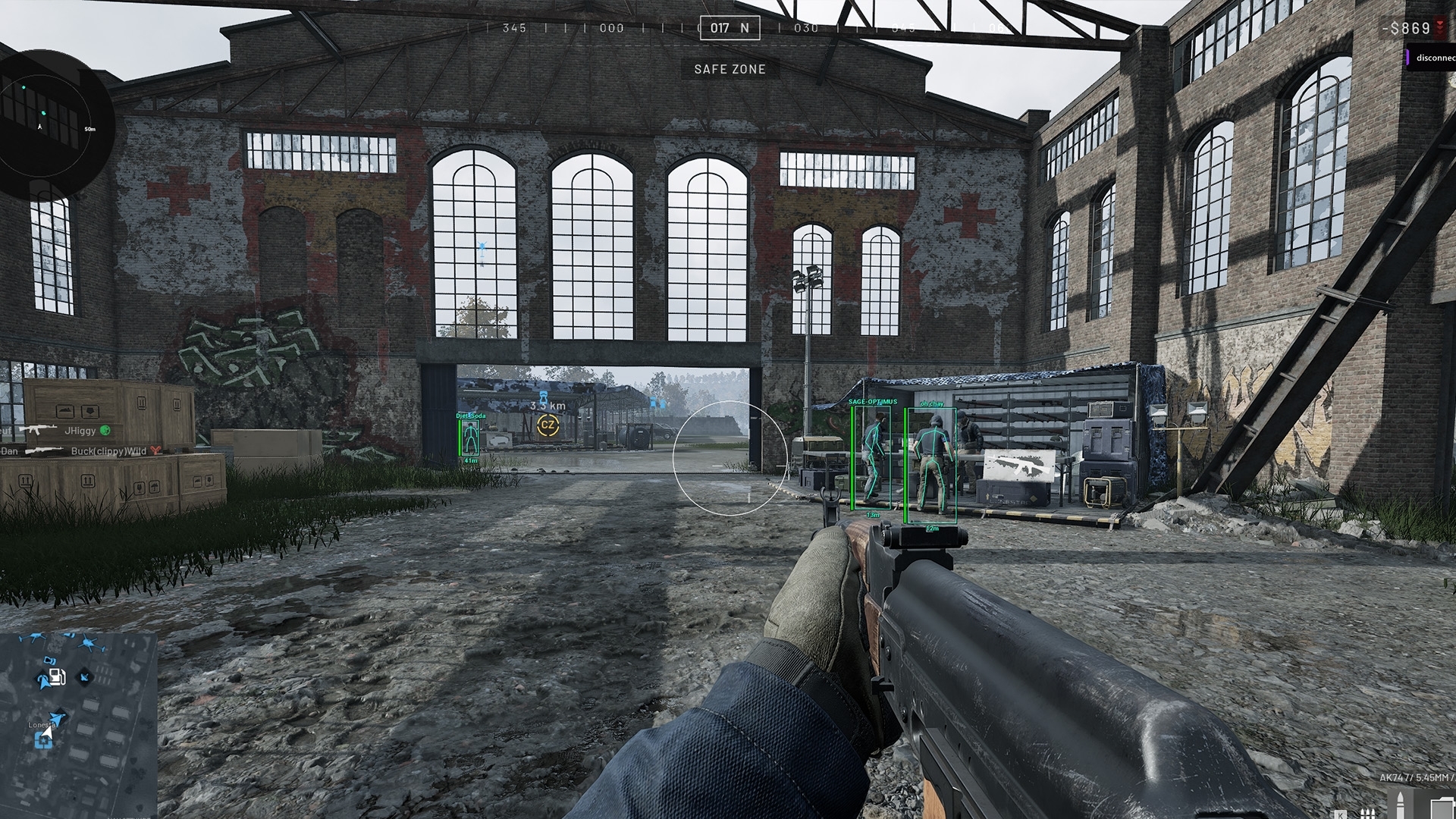
The official policy names aimbots, ESP and radar among prohibited cheats. Turning off one feature does not turn another into an approved game function. A display that only draws boxes is still a third-party cheat display, even if it never moves your crosshair.
A recording is narrower evidence again. It shows what the capture method recorded, during that session, with that configuration. If an overlay is absent from the recording, that does not prove that the anti-cheat could not identify software on the computer. Capture behaviour is not an account-protection feature.
The Wardogs External product description documents what Disconnect offers. Its aimbot, Player ESP and radar should be understood as cheat functions, with account risk, rather than as developer-approved additions.
Read reports without inventing a detection record
A statement that somebody was banned is a report about an outcome. It does not, by itself, identify the cause, the software used, the relevant date or whether the restriction came from a community server. Those details matter before attributing the outcome to a specific cheat.
Equally, a statement that somebody has played without a ban is not a controlled test. You would need a defined group, a period of observation and consistent reporting to turn individual stories into a meaningful rate. A handful of comments cannot provide that measurement.
Be precise about uncertainty. A provider notice, a developer announcement and a player report should stay attributed to their respective sources. If two accounts of an event disagree, the disagreement is part of the evidence. Choosing the most reassuring one does not resolve it.
For your own decision, keep the facts compact: Wardogs names ELYTRA, the developer prohibits cheats, and Disconnect publishes a current product status. The remaining uncertainty is real. No screenshot, subscription length or preference for one feature supplies a permanent guarantee.
Frequently asked questions
Does Wardogs use ELYTRA anti-cheat?
The official Wardogs Steam page names ELYTRA and identifies kernel-level anti-cheat. That is the current official disclosure checked for this article.
Does an anti-cheat launch error mean I am banned?
An error alone does not establish a permanent account ban. Keep the exact message and identify whether it concerns startup, connection or an explicit restriction before seeking the appropriate support.
Can a community server ban affect every server?
A community administrator ban concerns that server. Developer enforcement is separate and can restrict online play more broadly. Read the notice to identify who issued it.
Does an undetected notice guarantee future safety?
No. It reports the provider's current status. It does not guarantee future detection outcomes or remove the possibility of account enforcement.